Choosing the right commercial table base is essential for stability, guest comfort and the smooth running of your venue. The base must suit the size and weight of the table top, provide enough legroom and perform reliably in its intended environment.
In this guide, we explain the main table base heights, styles, materials and compatibility considerations to help you choose the right option for your restaurant, pub, café or hospitality venue.
What Height Should a Commercial Table Base Be?
Getting your table heights right makes a huge difference to your venue’s vibe. It keeps your guests comfortable, helps guide people naturally through your space, and helps to separate different areas so everything looks balanced.
Here’s a quick look at standard commercial table heights and how to use them:
- Coffee Height (43-45cm): Best for low lounge seating, waiting areas, or anywhere you want a relaxed, sofa-side mood.
- Dining Height (71-73cm): This is standard dining height, perfect for a restaurant table base setup in pubs and cafés.
- Mid-Height (88cm): A handy halfway option that pairs with mid-height stools. Perfect for an informal eating area.
- Poseur / Bar Height (107-108cm): High-top tables for lively social spaces, casual drinks, or pairing with bar stools
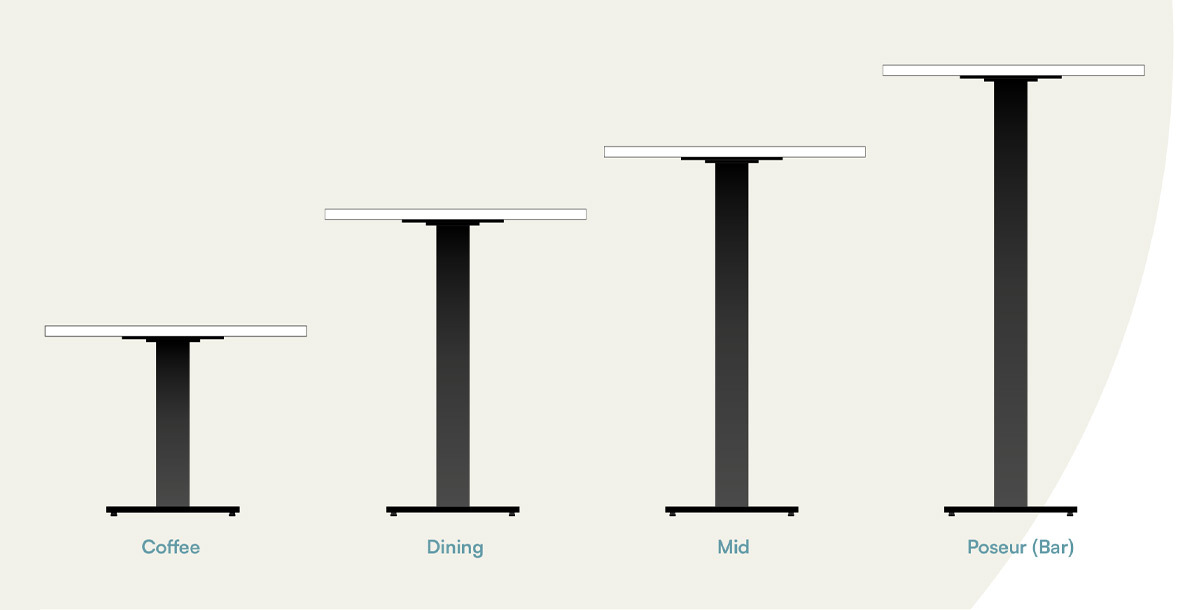
Standard commercial table base heights
Commercial Table Base Styles and Footprints
Once you’ve chosen the height, it’s time to select the shape, or footprint, of the base. This decision comes down to three key factors: table stability, guest legroom, and chair clearance.
Below, we’ve broken down the main base styles and where they perform best. Keep in mind that these are general guidelines - always double-check the maximum top size and weight limits for your specific base before buying:
- Single Pedestal (Round, Square, or Cross): A versatile choice for smaller two-to-four-person tables. Because there is just one central column, your guests won’t be knocking their knees against table legs, and chairs can be tucked in easily.
Typical Top Sizes: Ideal for round or square tops up to 800mm (80cm). Standard base footprints range from 400mm (40cm) to 600mm (60cm) wide depending on the top weight.
- Double Pedestal (or Twin Legs): If you are using larger rectangular tops - especially anything 120cm or longer – you’ll want a double pedestal. Two columns spread the load evenly across the table, preventing top heavy tipping and keeping the table stable.
Typical Top Sizes: Designed for rectangular tops from 1200mm x 700mm (120x70cm) up to 1800mm x 900mm (180x90cm).
- Four-Legged or Trestle Bases: These bases have a classic feel and offer fantastic stability. Just keep in mind where your chairs will sit, as four outer legs can slightly limit how far guests can pull their seats in compared to a central pedestal.
Typical Top Sizes: Great for large square tops (900mm/90cm+) or long dining tables where central bases don't give enough support at the ends.
- Flip-Top or Nesting Bases: Must-haves if your venue holds events or has an outdoor patio that needs to be cleared at night. The top flips vertically, allowing you to stack or nest the tables neatly out of the way in seconds.
Typical Top Sizes: Typically supports round or square tops up to 800mm to allow smooth vertical rotation without hitting the floor.
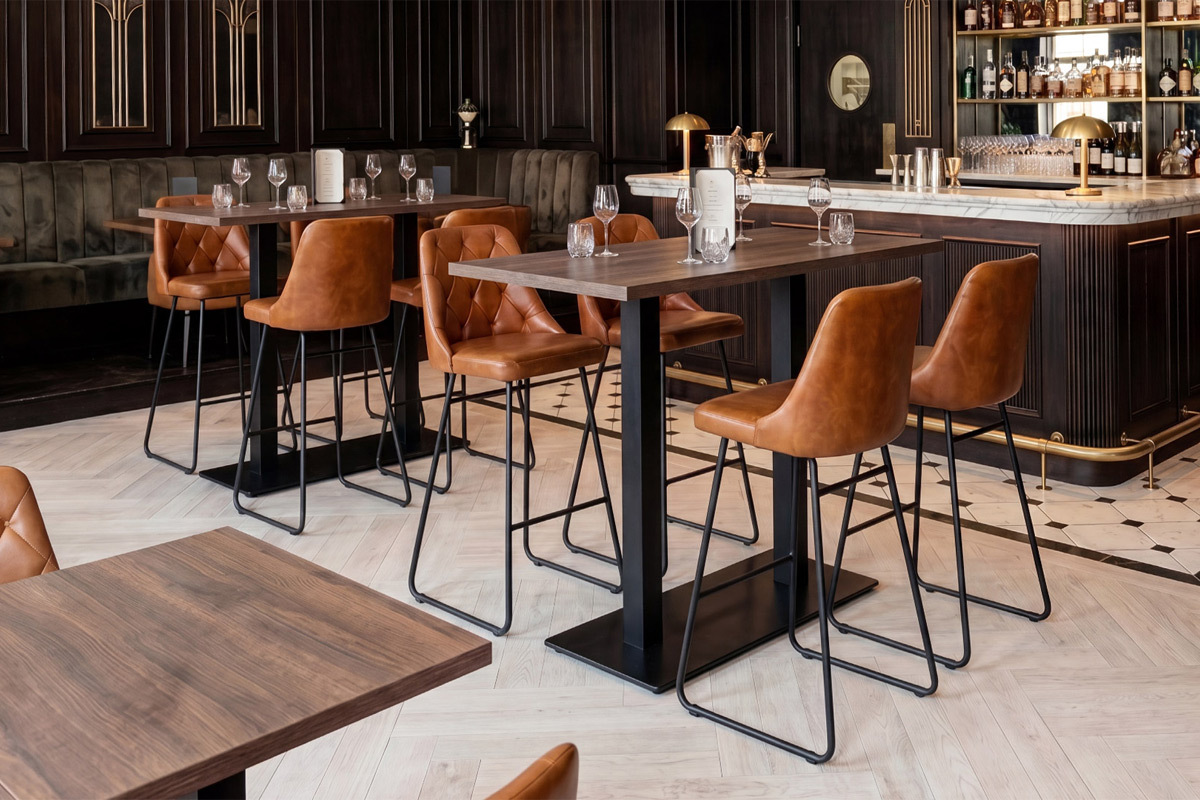
Rectangular table tops need a double pedestal base
Choosing Indoor and Outdoor Table Base Materials
Table bases work hard every single day - they take constant knocks from chairs, feet, and vacuum cleaners indoors, while facing rain, sun, and cold weather outside.
Here is a quick look at what works best depending on where you plan to use them:
- Indoor Spaces (Cast Iron, Steel, or Aluminium): For inside your venue, heavy cast iron or steel bases are hard to beat. Cast iron gives your tables a low centre of gravity, keeping them grounded and stable even during busy service. If you want a more design-led feel, decorative steel or aluminium bases add character without sacrificing stability.
- Outdoor Terraces & Patios (Aluminium, Polypropylene, or Galvanised Steel): Outdoor furniture needs to stand up to the elements. Lightweight, rust-proof aluminium is brilliant if staff need to bring tables inside at night. For coastal spots or year-round outdoor setups, weather-resistant materials like galvanised or powder-coated steel and durable polypropylene prevent rust, corrosion, and UV damage.
- High-Traffic & Flexible Areas: If you are constantly moving furniture around to clear space for events, opt for lightweight aluminium or powder-coated frames that staff can move without hurting their backs.
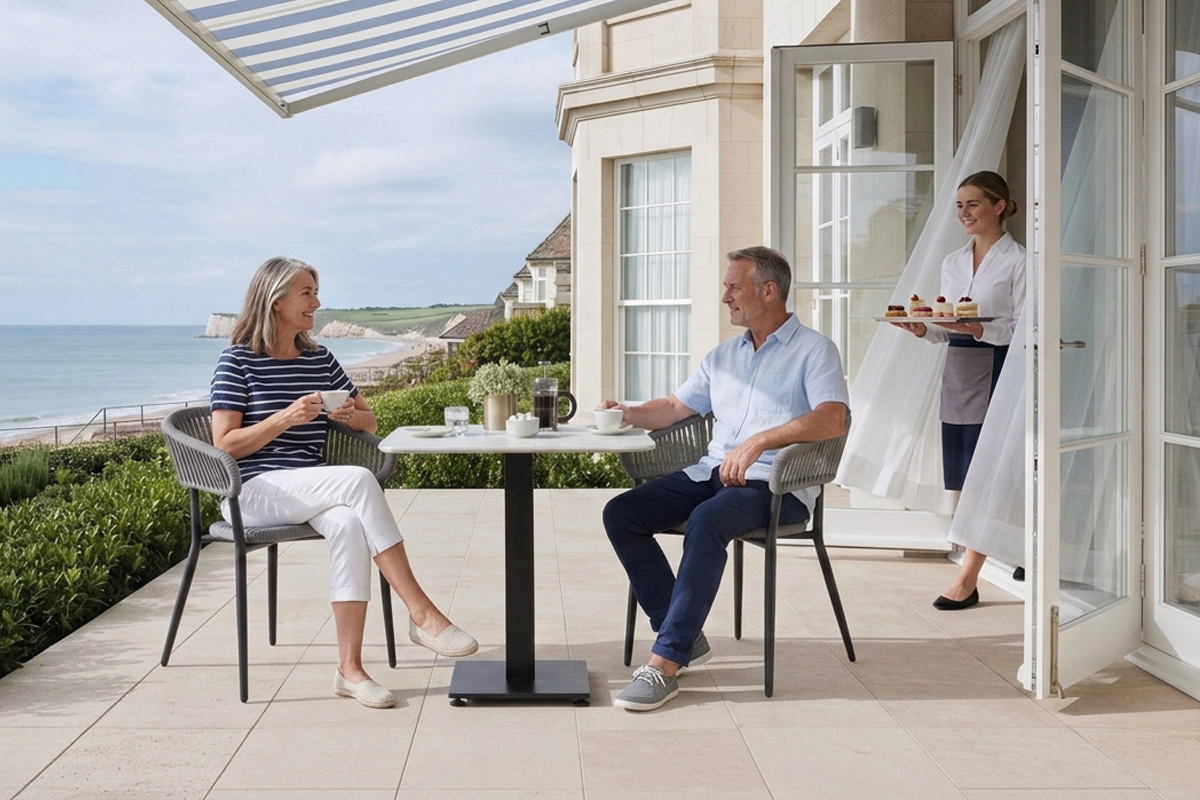
Outdoor tables need a weatherproof table base
How to Match a Table Base with a Table Top
While we’re focusing mostly on table bases, we can't completely ignore the table top! A table is a team effort and picking a top and base that naturally belong together saves you headaches down the road.
Keeping these three quick points in mind will make sure your setup is both safe and stylish:
- Match the Shapes: As a general rule, round bases look best with round tops, while square or rectangular bases line up neatly with straight-edged tops. It just keeps the overall look balanced and clean.
- Watch the Weight: Lightweight laminate tops work with a wide range of bases. But if you are leaning toward heavy materials, like solid oak or genuine marble, you will need a heavy-duty table base with a wide footprint to keep the centre of gravity low and prevent tipping.
- Check the Fixing System: Make sure your top and base can be attached easily. Many tops come pre-drilled to match specific base patterns or feature clever bracket designs like the Extrema EASYFIX system, which makes assembly quick and secure.
Our Teams Advice:
One of the most common causes of table instability is an unsuitable top and base combination. Heavy solid wood or marble-effect tops should be paired with a base that is designed to support their size and weight.
Not sure whether a top and base will work together?
Send our team the top size, material and intended location, and we’ll help you identify a suitable base.
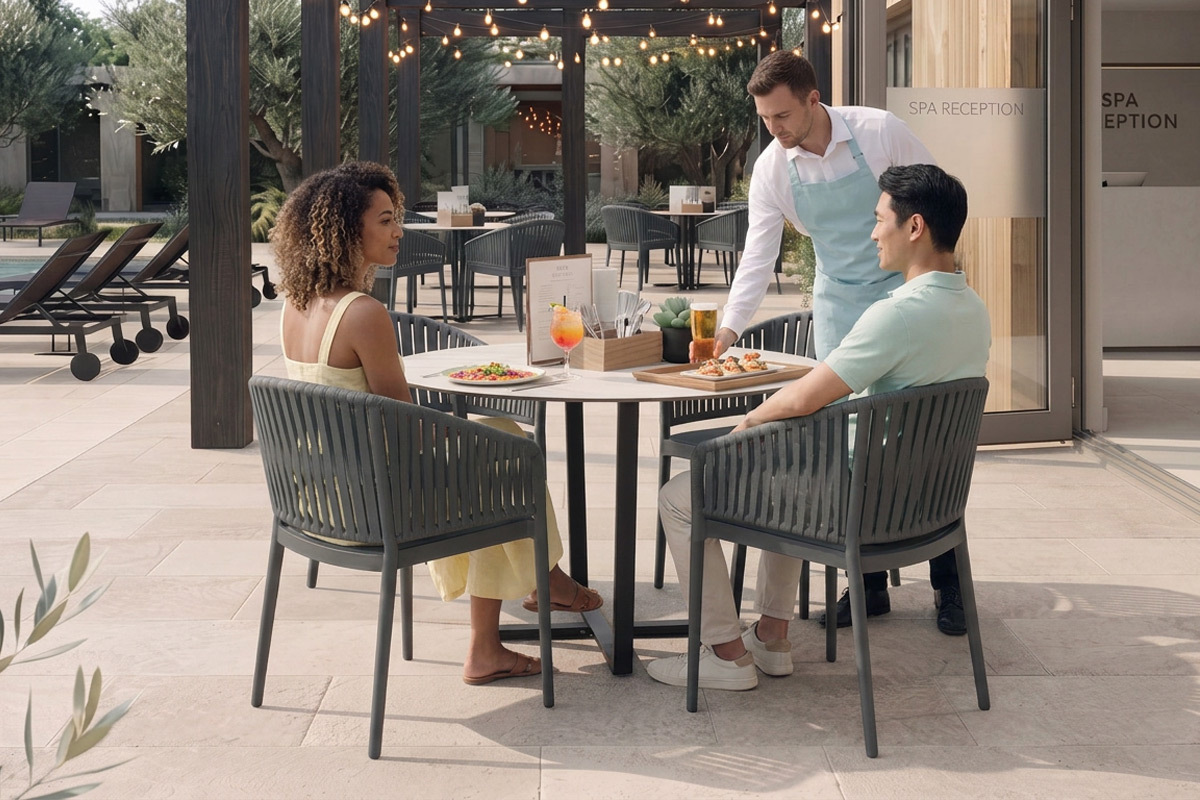
Large round table tops need stability from heavy duty table bases
How to Prevent Commercial Tables from Wobbling
A wobbly table, leading to spilt drinks or sloshed soup, can really ruin a guest’s experience! The good news is that keeping your tables steady and looking great doesn't take much effort once you know what to watch out for.
Here are a few simple habits to keep your table bases stable and rust-free:
- Choose Self-Levelling Feet: If your floor is uneven, standard table legs will rock. Look for bases with adjustable feet, or better yet, built-in self-levelling technology, like our FLAT bases, that automatically adjusts to uneven flooring in seconds.
- Tighten Fixings Regularly: Over time, guests leaning on tables and staff shifting them around can loosen the bolts connecting the base to the top. Keep tools handy during routine deep cleans to give the fixings a quick tighten up.
- Clean the Base, Not Just the Top: Spilled drinks and mop water naturally gather around the bottom of table feet. Wipe down your bases with a mild soapy solution and dry them off - especially powder-coated or metal ones - to stop corrosion and rust before it gets a chance to start. Check out our Care & Maintenance Guide for more tips
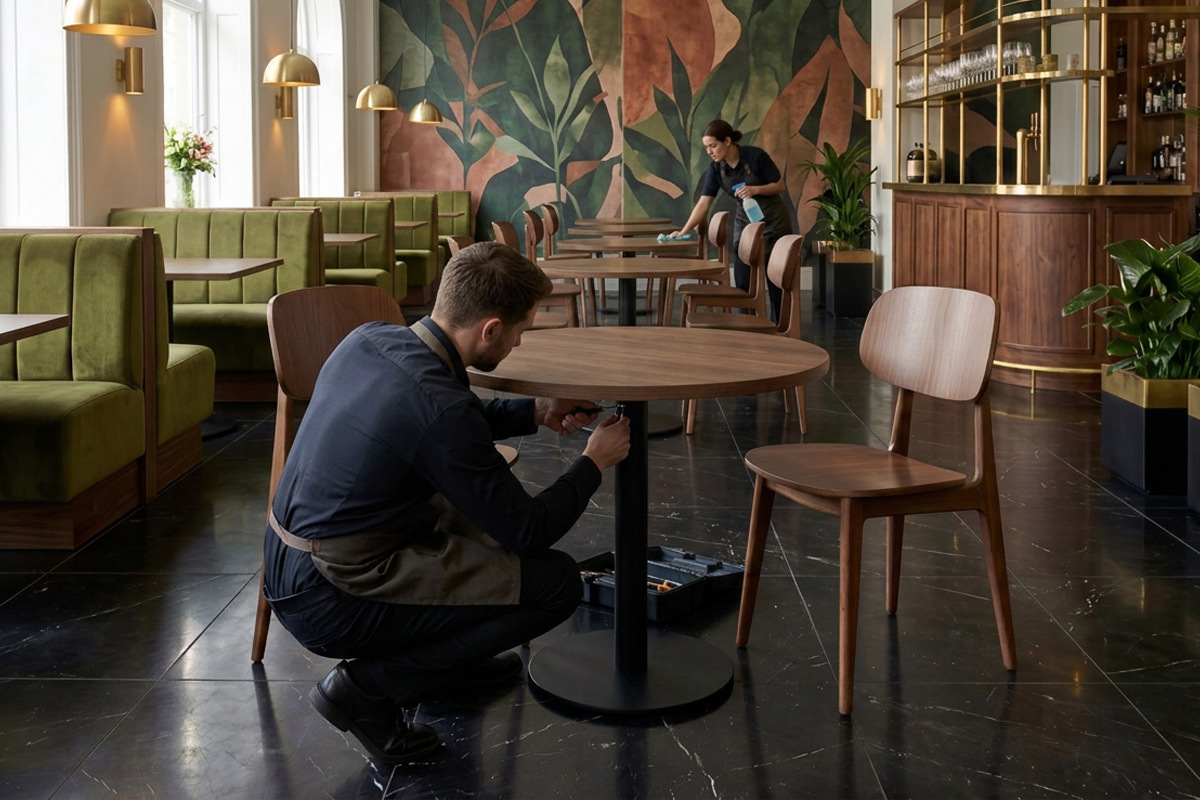
Always keep your table bases cleaned and maintained
Commercial Table Base Buying Checklist
Choosing the right commercial table base doesn't have to be complicated. When you match the right height, footprint, and material to your space, you create a seamless layout that keeps your guests comfortable and your staff's day running smoothly.
Before you place your order, run through this quick final checklist to make sure you've covered all the bases:
- Double-check your measurements: Confirm that your base height matches your chair or stool heights, so guests have comfortable legroom. Not sure what size table you need? Check out our blog post on working out table size and capacity for your layout.
- Balance the weight: Ensure heavy tops (like solid wood or marble) are paired with heavy-duty bases wide enough to prevent tipping.
- Match the environment: Stick to weather-resistant materials like aluminium or galvanised steel for outdoors and save cast iron or bases with decorative finishes for inside.
Need Some Help?
If you are ever unsure about whether a specific top and base combination will work together, just reach out to our team. We're always here to help you get the perfect fit for your venue! Fill in our quick contact form or request a free consultation with our experienced team today.
Call: 01452 336 520
Email: sales@eclipsefurniture.co.uk
Commercial Table Base FAQs
What is the standard height for a commercial restaurant table base?
Standard commercial dining table bases sit between 71cm and 73cm high, which works comfortably with standard 45cm dining chairs. Poseur or bar height table bases measure between 107cm and 108cm high, designed to pair with 75cm bar stools.
How do I stop restaurant tables from wobbling on uneven floors?
You can eliminate table wobble by installing self-levelling technology (such as FLAT® bases) or choosing bases fitted with adjustable feet. These allow you to adjust each corner to compensate for uneven tiles, flagstones, or outdoor timber decking.
Can I use heavy marble or solid oak tops on a lightweight table base?
Only if the base is specifically rated for the top’s size and weight. Heavy tops generally require a sturdy base with a suitable footprint and maximum weight capacity. Always check the compatibility information for the individual base before ordering.
What table bases are best for outdoor pub gardens and patios?
Outdoor areas require rust-proof, weather-resistant materials like powder-coated aluminium, galvanised steel, or durable polypropylene. If your staff need to pack the furniture away at night, lightweight aluminium flip-top or nesting bases are the best choice for quick, compact storage.