What Size Table Do I Need for My Venue?
It’s a given. Every venue owner wants to maximise seating capacity and offer the most covers possible while ensuring a comfortable experience for guests and smooth flow for staff. The choice of tables is an important one; it influences the footprint of the entire dining experience.
But what sizes and shapes of commercial tables are going to hit that sweet spot in your restaurant, café, or bistro? Too small, and your guests feel cramped; too large, and you’re wasting valuable floor space. We look at the key points that will help to shape your decision.
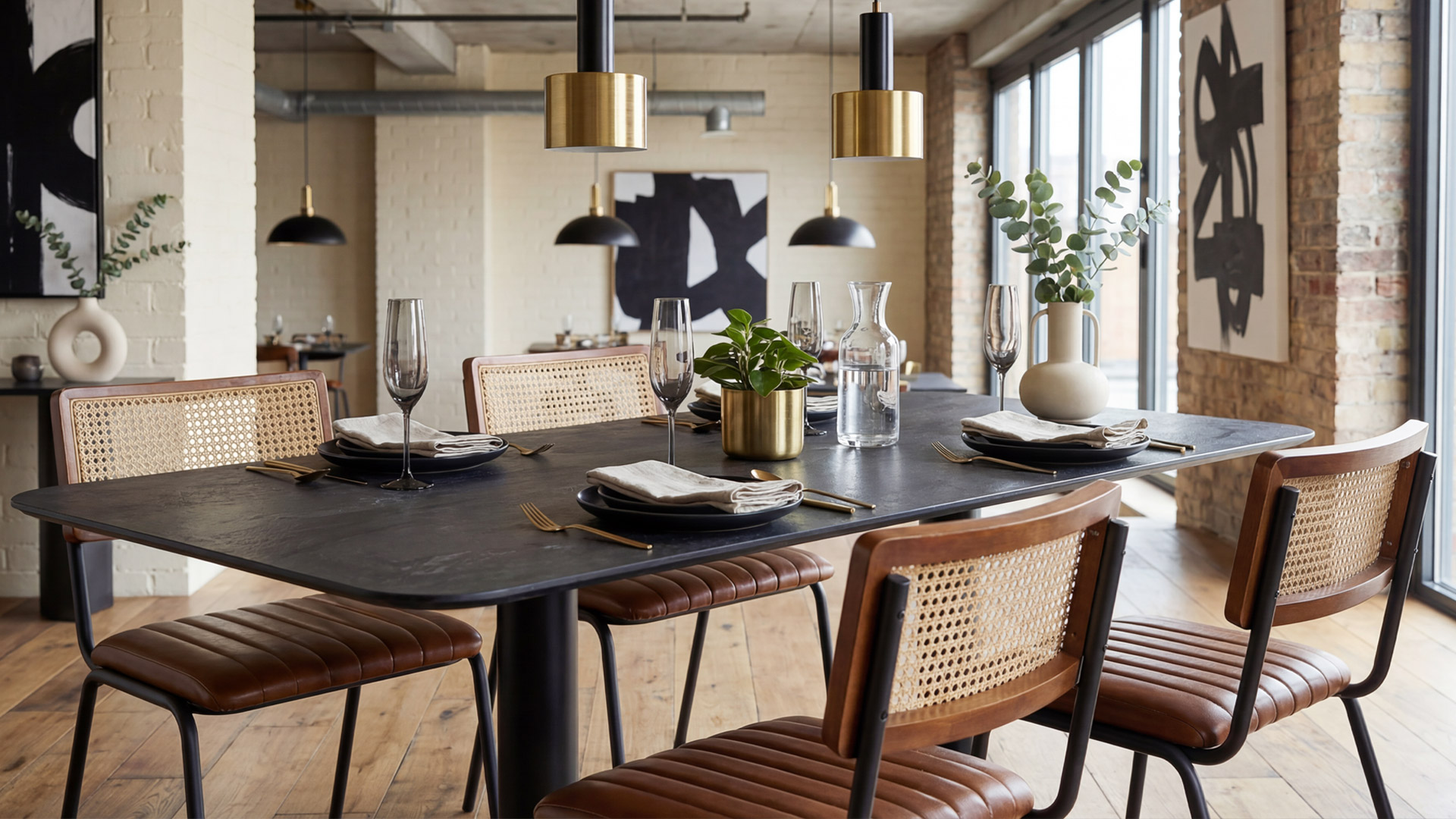
Commercial Table Size Guide
Which group size do you need to seat? The right table size depends on both the number of guests and the style of dining.
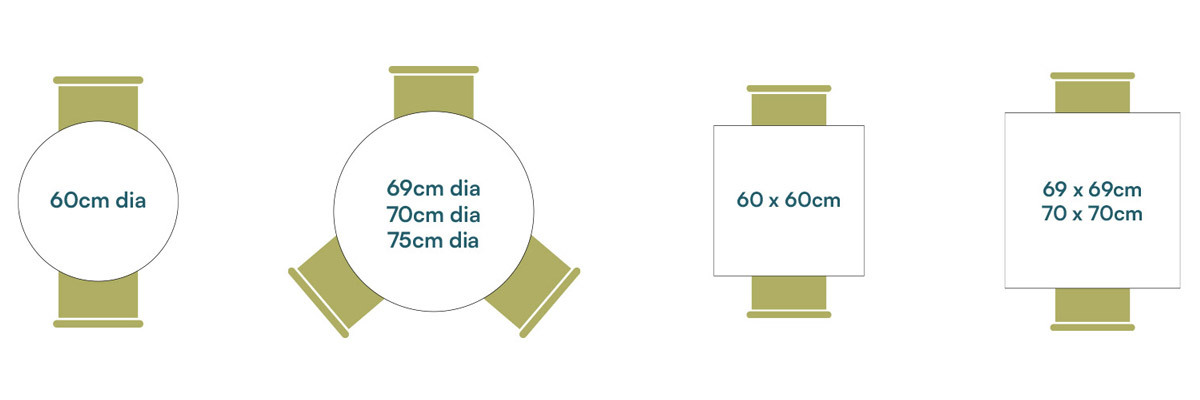
Tables for Two:
Casual Dining/Cafe: 60cm (Round) or 60 x 60cm (Square).
Full Dining: 70cm (Round) or 70 x 70cm (Square) to allow for side dishes and glassware.
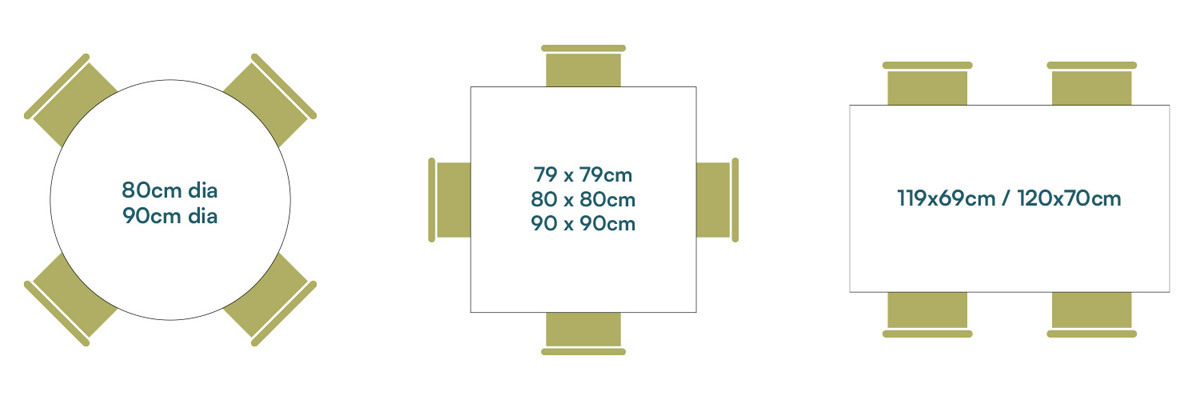
 Tables for Four:
80cm or 90cm (Round), 80 x 80cm or 90 x 90 cm (Square) or 120 x 70cm (Rectangular).
All these tables will seat four guests, but the square option is great for pushing together to accommodate larger groups if needed.
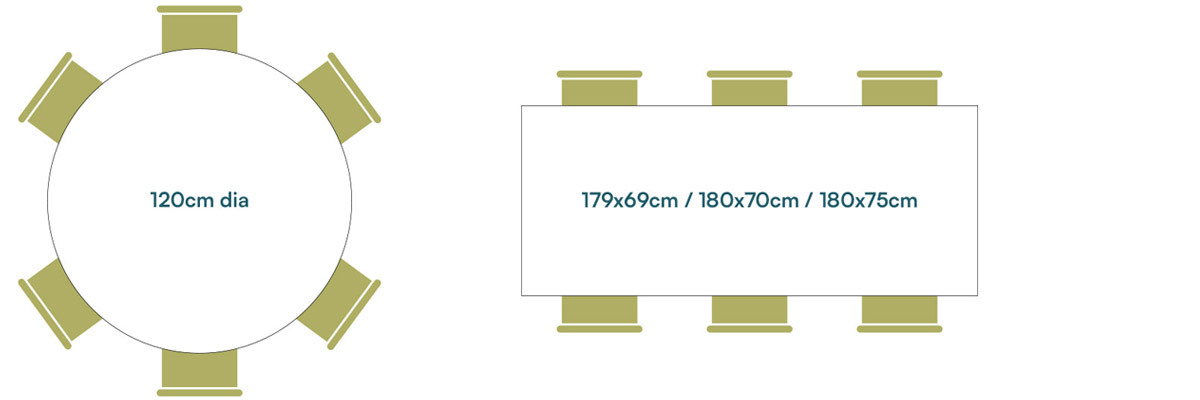
 Tables for Six:
120cm (Round), 180 x 70cm (Rectangular).
Large Groups:
Sometimes, you might want a table that can seat large groups of over 6 people. This can make a statement and be a focal point in a dining space, but consider whether you’ll always have large groups, as two people sat at a huge table is not a good use of space.
Many of our tables tops, such as Omega Laminates and Solid Ash are available in large bespoke sizes that aren’t shown on the website. You can order them in sizes up to 180cm diameter (Round) or 300cm x 125 cm (Rectangular).
How Much Space Do I Need to Leave Between Tables?
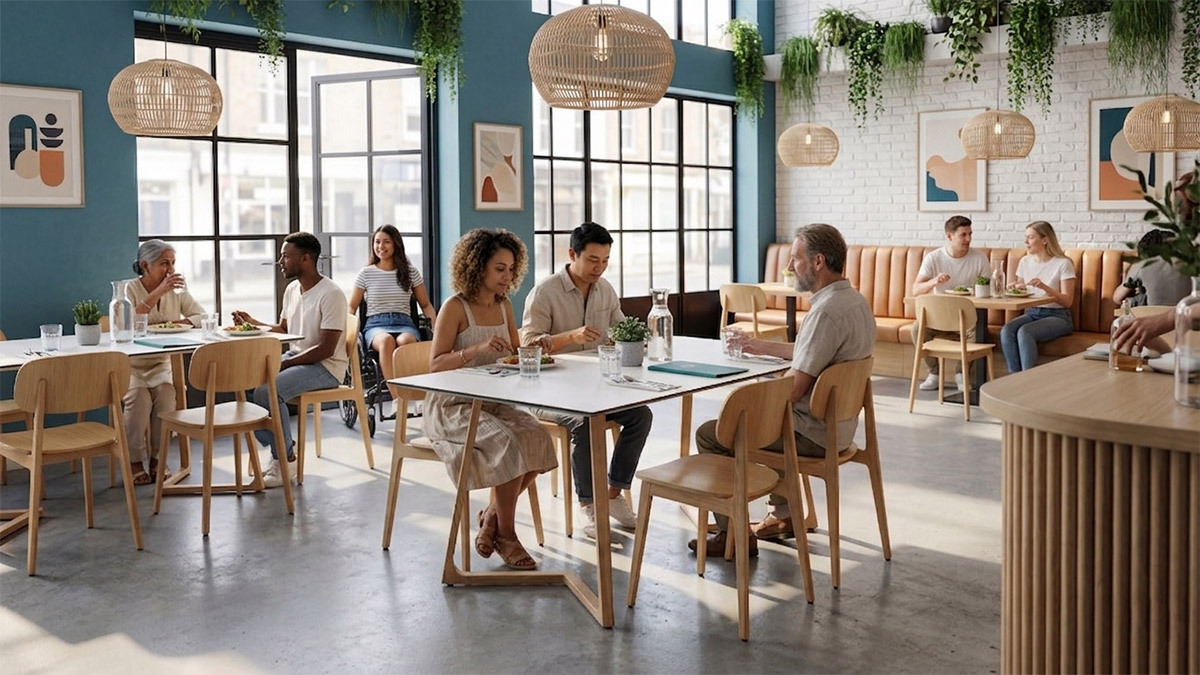
Maximising your space isn’t just about filling a room with as many tables as possible. It’s important to consider how much room that your choice of chairs will take up and also the amount of space you need to leave between tables. Here’s a quick guide:
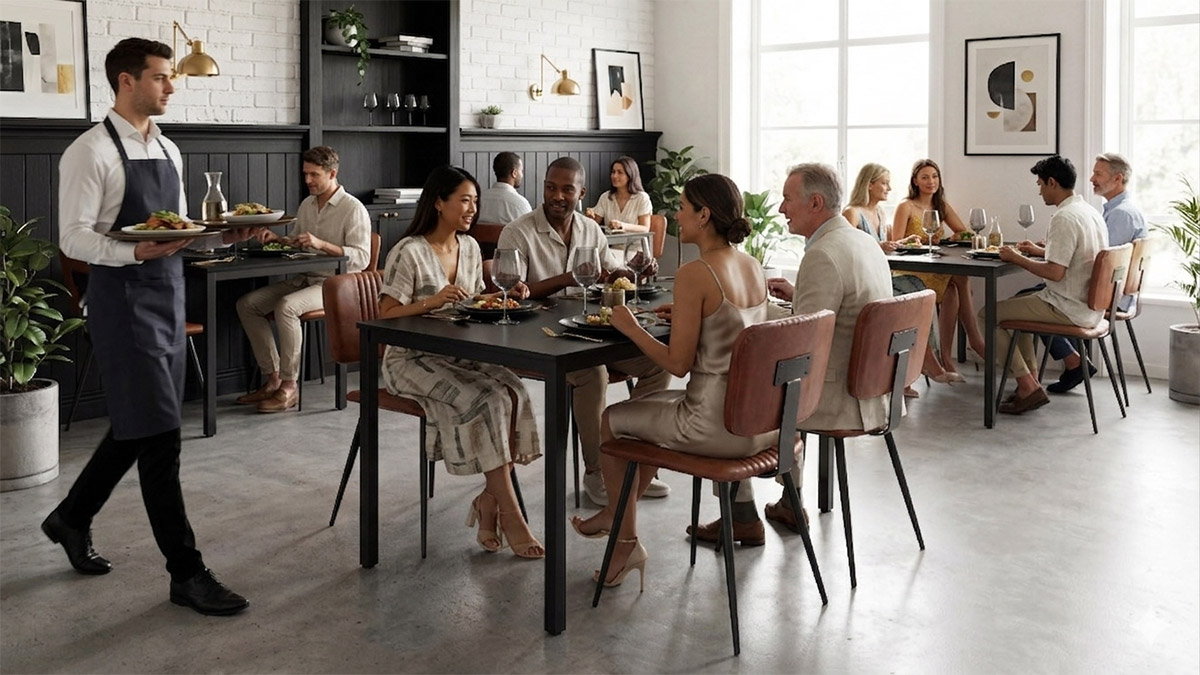
The 45cm Rule: Leave at least 45cm between the edge of the table and the back of a chair when someone is seated. Also, it’s important, especially with armchairs, that they fit under the table and can be pushed in when not in use.
Service Corridors: Factor in 90cm to 120cm for main walkways so staff can move freely with trays. 120cm is the width needed for a wheelchair user and pedestrian to pass each other.
What Table Shape Should I Choose for My Venue?
Table shape is a personal, aesthetic choice, but these points might help you to decide:
Square/Rectangle: These shapes are the best for flexibility. They can be joined together for larger parties and sit flush against walls to save space.
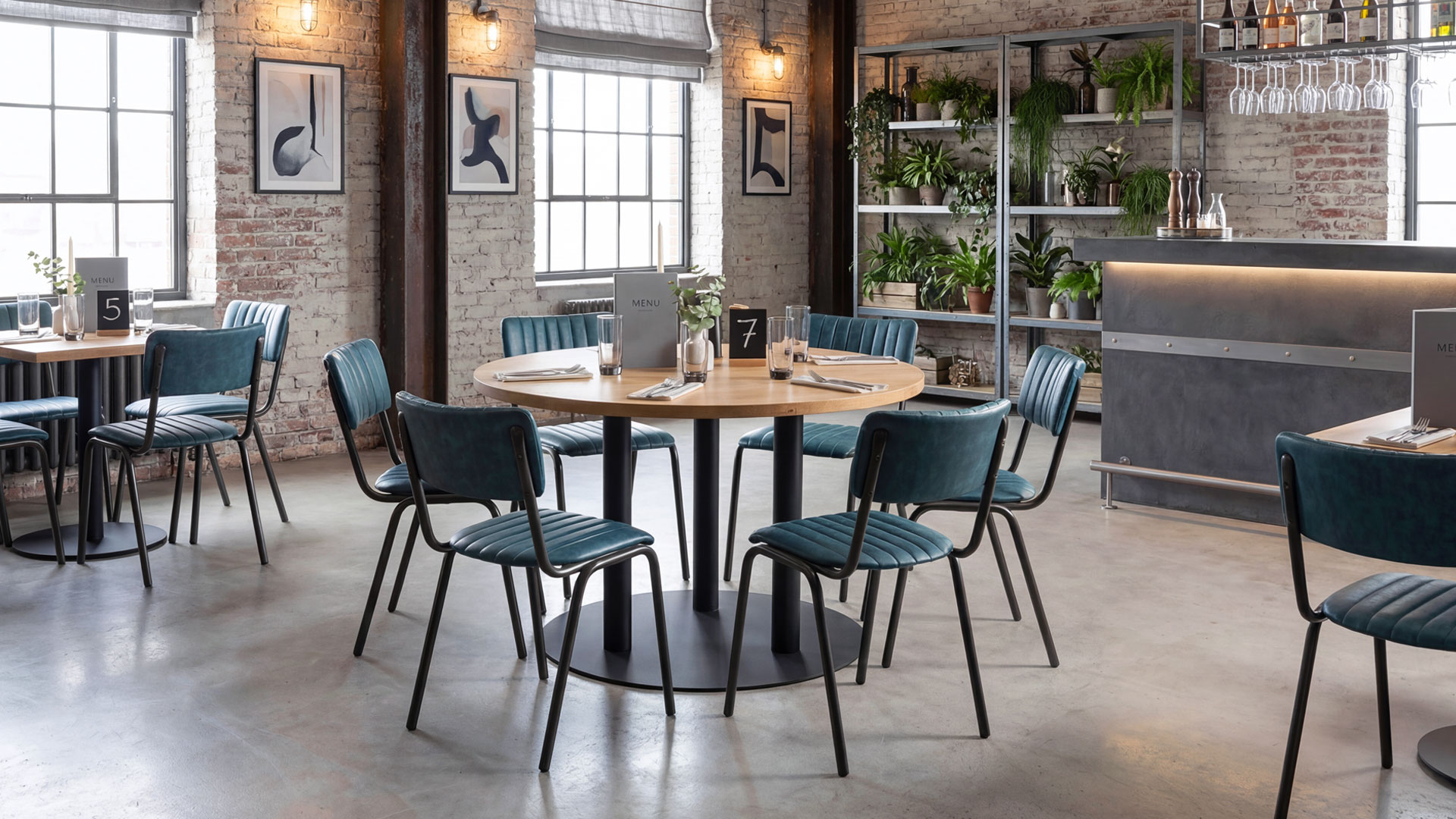
Round: Circular tables are best for flow and conversation. They eliminate sharp corners in tight walkways and often allow for an extra chair if needed.
It’s also worth mentioning that there is a rise in popularity of mid-height and poseur tables, particularly for casual dining. They’re great for social areas where space is tight but vertical seating adds variety.
Expert Advice on Choosing the Right Table
Always start with your floor plan before choosing tables. Seeing the space that you’ve got available as a flat shape will be invaluable to work out what sizes and shapes will work best for you. If you need some help with layout, get in touch and our expert team will be able to give you some advice.
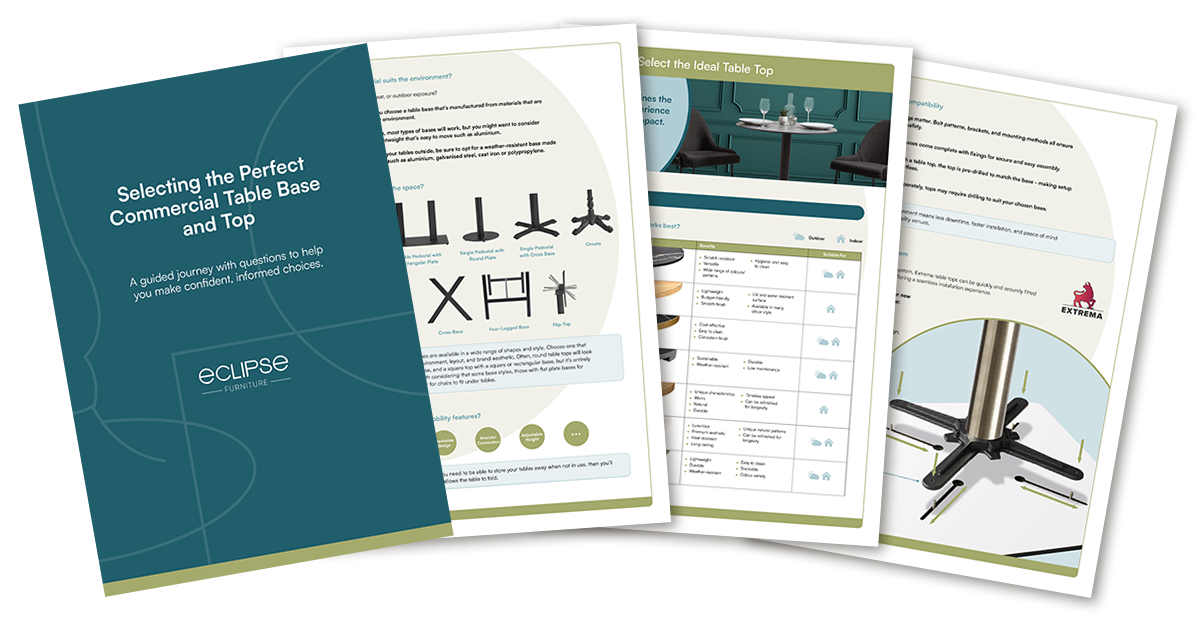
Once you know what size and shape table is right for you, there are a few other points that you’ll need to take into account before purchasing. For advice on choosing the right table base and table top combination, material and durability considerations, check out our expert, step-by-step guide.
Get in Touch...
At Eclipse Furniture, we thrive on helping businesses like yours create inspirational spaces, and our team is here to help you bring your vision life. If you need some advice on optimising your floor plan or the best tables for your venue, get in touch for a complimentary consultation.
Call: 01452 336 520
Email: sales@eclipsefurniture.co.uk
FAQs
How much space should I leave between dining tables?
To ensure guest comfort, you should leave at least 45cm between the edge of a table and the back of a chair when a guest is seated. For main walkways and service corridors, factor in 90cm to 120cm so staff can move freely with trays.
What is the best table shape for a flexible floor plan?
Square and rectangular tables offer the most flexibility for a venue. They can sit flush against walls to save space or be joined together easily to accommodate larger parties.
Is it better to have one large table or several small ones?
Small square or rectangular tables offer the most flexibility because they can be pushed together for large groups or kept separate for couples. While a large communal table makes a statement, smaller modular tables ensure you don't lose covers when a big table is only partially occupied.