Why Are Hospitality Interiors Becoming Softer?
After years of industrial minimalism, commercial interiors are beginning to soften. Rounded silhouettes, generous upholstery and tactile fabrics are increasingly being used alongside metal, timber and stone to create venues that feel warmer, more comfortable and more inviting.
For restaurants, pubs, cafés and hotels, this is more than an aesthetic trend. Carefully chosen curved commercial furniture can soften rigid layouts, improve guest comfort and help create spaces where people want to spend more time.
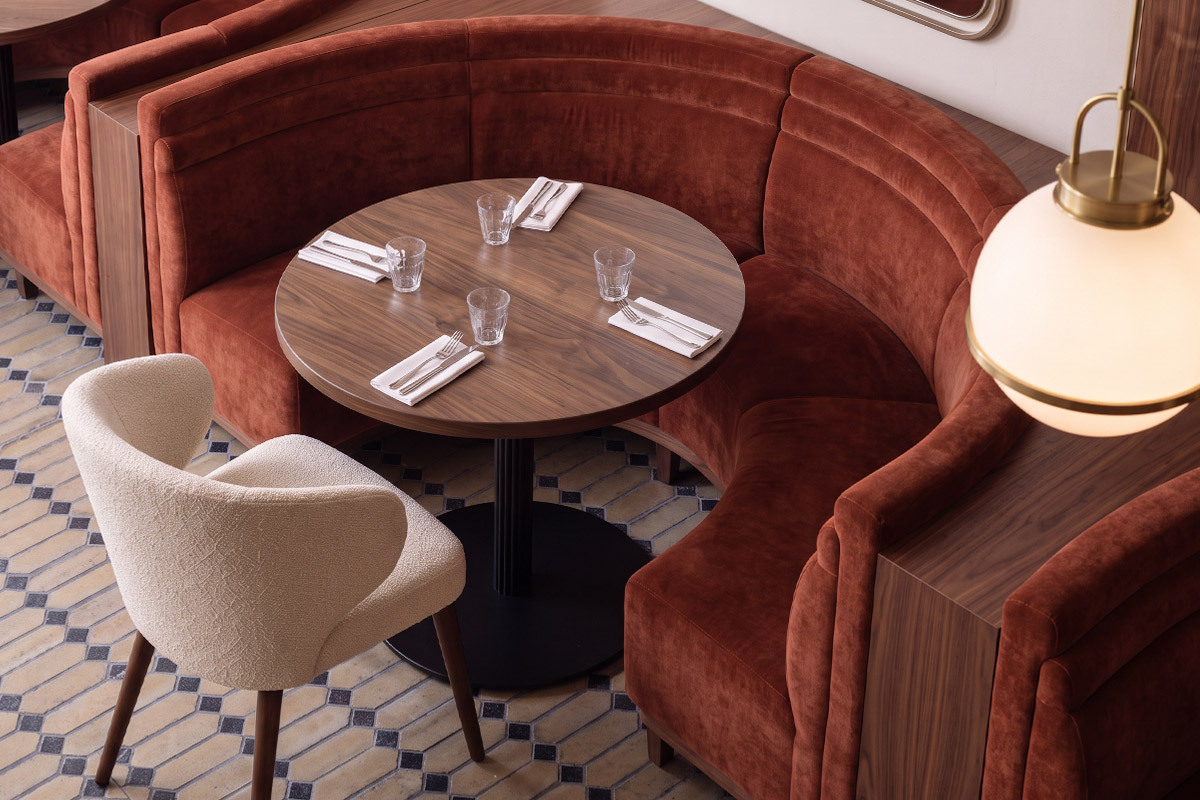
Shown here: Selma Armchair in Recycled Bouclé
At Salone del Mobile, organic forms, softer lines and tactile upholstery were prominent across furniture and interior displays. Nicola Crawley, Senior Category Manager at Eclipse Furniture, saw the trend first-hand during her visit to Milan.
Nicola commented: “A clear shift is underway towards softer lines, natural tones, and greater comfort, all without compromising practicality. We’re looking forward to taking these insights back to Eclipse HQ and shaping the next phase of our range.”
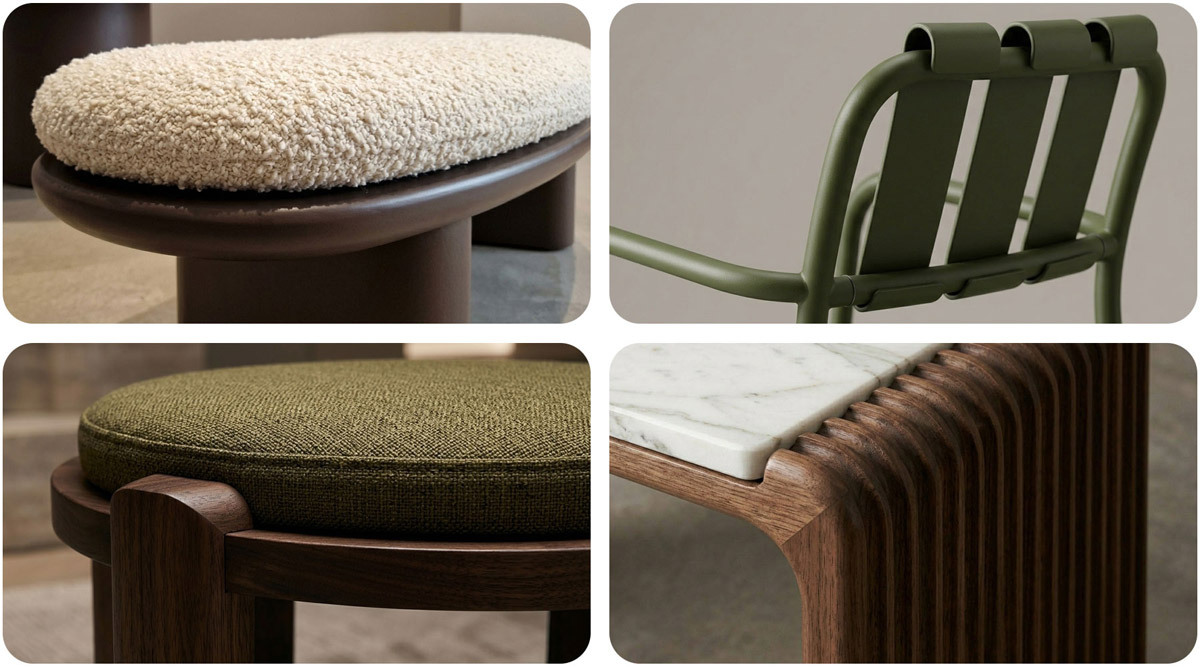
How Curved Furniture Can Change the Guest Experience
Tactile Comfort: We don’t just look at spaces - we experience them. The moment a guest sits down, their senses take over. Plush upholstery, deep-cushioned seats, and tactile fabrics like bouclé, velvet, or supple leather send an immediate signal to the brain: you can relax here.
Comfortable, tactile seating can encourage guests to settle into a space rather than feeling rushed. For hospitality venues, creating an environment that supports longer, more relaxed visits can contribute to a more positive overall guest experience.
Softer Acoustics: Modern commercial spaces love hard surfaces - think polished concrete floors, subway tiles, and sleek hardwood tables. Although they make a statement, they come with a hidden acoustic cost: sound bounces around the room and creates a loud echo, so everyone ends up having to raise their voices to be heard.
Upholstered chairs, padded fixed seating and fabric-backed booths can help absorb some reflected sound, reducing the hard, echoing quality often found in spaces dominated by concrete, tile, glass and timber.
Visual Warmth: Hard angles and boxy layouts can easily make large, open venues feel rigid, clinical, or cavernous. Introducing soft fabrics alongside organic curves breaks up linear architecture, visually softening the environment and making it more inviting.
This subtle sense of enclosure makes people feel secure and relaxed - creating the perfect backdrop for easy conversation, human connection, and comfortable visits.
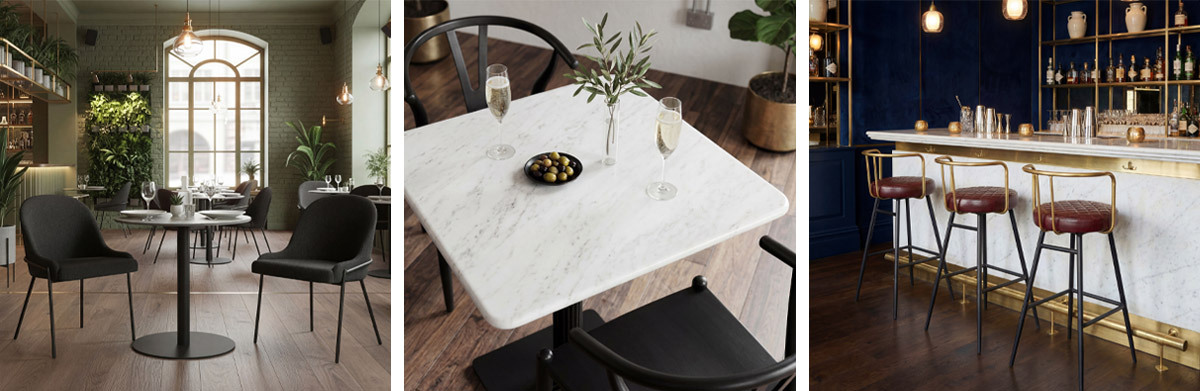
Shown here: Westbury Side Chair, Carrara Marble Table Top, Aulenti Leather Bar Stool
Choosing Tactile Fabrics for Commercial Seating
When selecting upholstery for a commercial venue, you shouldn't have to choose between tactility and long-term durability. Today’s contract-grade textiles mean you can give guests the soft, luxurious comfort they crave without worrying about premature wear, stubborn stains, or saggy cushions.
Here is what to look for when specifying soft fabrics for pubs, restaurants or hotels:
Textured Bouclé & Woven Tweeds: Heavy textures add cosy appeal and visual depth to a room, making furniture look more inviting. Opt for commercial-grade blends made with high wool content or strong synthetic fibres, like polyester, specifically engineered to resist pilling.
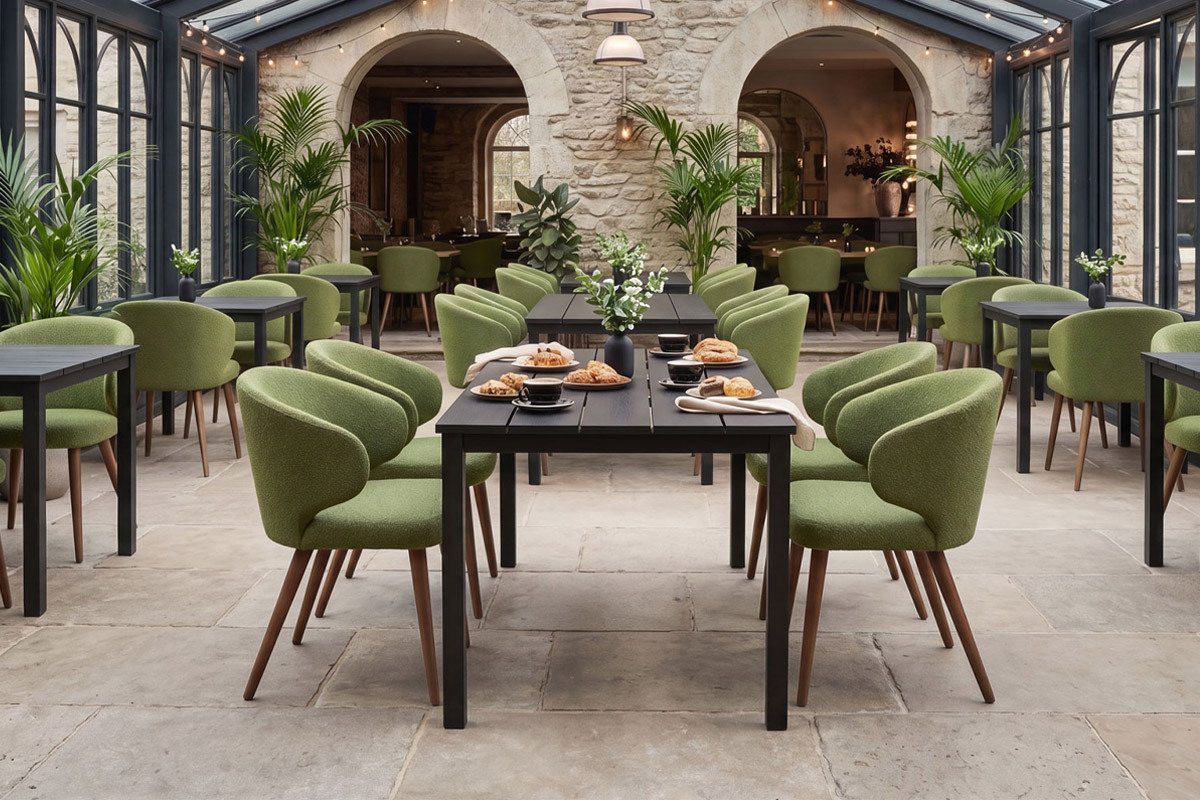
Shown here: Selma Armchair in Recycled Bouclé
Plush Velvets & Microfibres: Velvet instantly adds a touch of luxury and rich colour to dining chairs and soft seating. While venue owners used to fear velvet because of water marks and stains, modern commercial-performance velvets are different. They offer that signature soft feel paired with built-in stain-resistant treatments, meaning everyday spills can be blotted off before they sink in.
Supple Leathers & Soft Vinyls: If you are furnishing a high-traffic venue - like a busy pub, family-friendly restaurant, or bustling café - spills and heavy wear are inevitable. Soft-touch matte vinyls and distressed leathers give you the premium look and soft feel of luxury upholstery with wipe-clean convenience. You get hardwearing durability without that cold, shiny plastic feel of old-school vinyl.
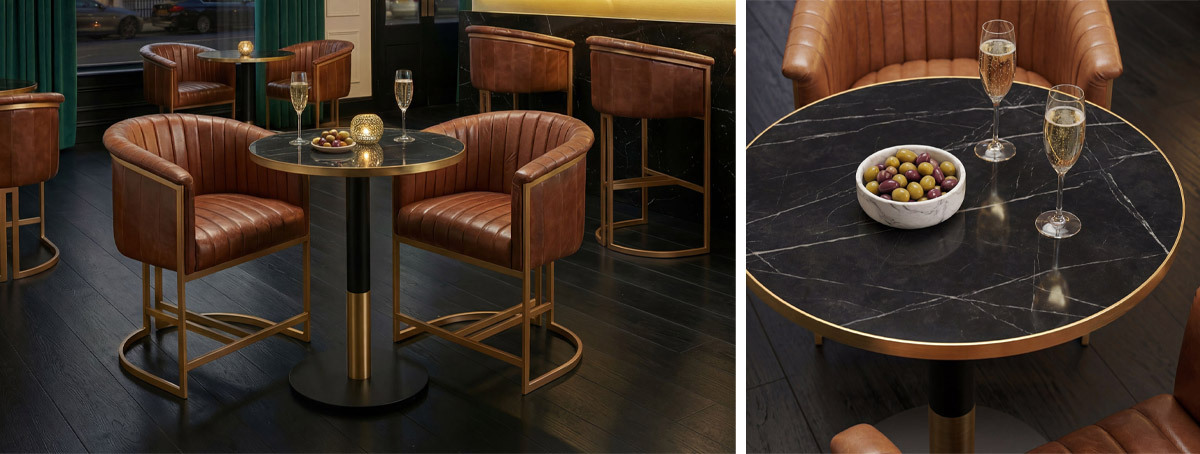
Shown here: Zanuso Leather Armchair, Omega Marble Effect Table Top
Generous Padding & Deep Cushioning: True softness goes deeper than just the outer fabric. A chair can be upholstered in a super-soft fabric, but if the cushion flattens out in six months, the comfort falls short. Always look for high-resilience (HR) commercial foam. This specialised foam provides a plush sit while springing back into shape after every guest, ensuring your seating maintains its support and sleek silhouette from season to season.
3 Ways to Use Curved Commercial Furniture
Bringing soft textures and organic shapes into your space doesn’t mean redesigning your entire floor plan. You can make a big difference with a few thoughtful furniture choices that balance out hard surfaces, warm up large rooms, and guide your guests naturally into comfortable spots. Here are three simple ways to bring curves and softness into your venue:
Pair Curved Tub Chairs with Soft Fabrics: Combine a rounded tub chair frame with a rich, textured fabric. The curved back of a tub chair naturally cradles the sitter, while plush materials like bouclé or textured weave enhance that cosy feeling. These work exceptionally well in lounge areas, hotel lobbies, or as accent seating around dining tables.
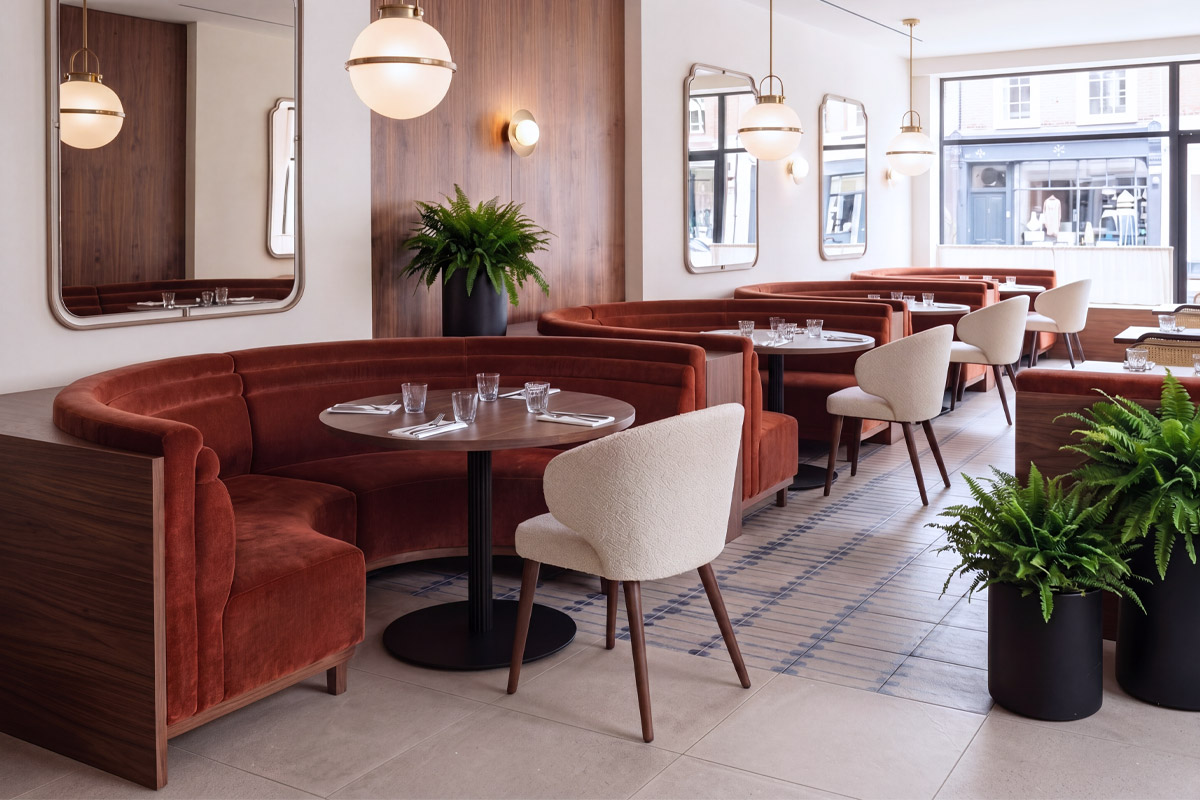
Swap Flat Walls for Soft-Back Fixed Seating: Long, flat dining walls can easily feel cold if left bare. You can soften these long lines by specifying padded banquette seating with fluted backs, channel tufting, or classic button-back cushioning. Beyond looking luxurious, upholstered booth seating breaks up structural walls, improves room acoustics, and makes wall-side dining feel like a premium experience rather than an afterthought.
Balance Hard Tables with Upholstered Chairs: Surround hard table tops, particularly square or rectangular shapes, with fully upholstered dining chairs. The contrast creates a balanced look: you get the practical, easy-clean benefits of a hard table top, while your guests enjoy the padded comfort and visual warmth of soft seating.
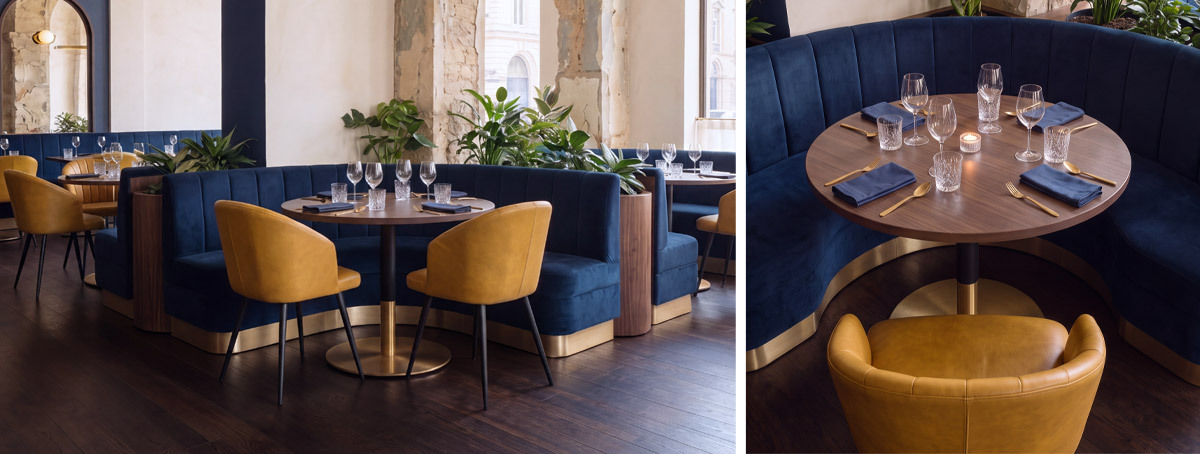
Shown here: Brooklyn Leather Tub Chair
Balancing Softness with Commercial Durability
Soft fabrics and organic shapes bring undeniable warmth to a room, but commercial furniture still has to work hard for a living. Before you place an order, run through this quick checklist to ensure your soft seating delivers contract-grade durability as well as inviting style:
1. Check the Martindale Rub Count
Check that the fabric has a Martindale rating appropriate for the intended level of use. For busy hospitality environments, specify a contract-grade fabric and consider abrasion resistance alongside pilling, colourfastness, stain resistance, cleaning requirements and fire performance. A high-rub-count fabrics mean your soft, textured bouclés or velvets can handle thousands of seated guests.
2. Prioritise Stain Protection
Accidental wine, coffee, and food spills are bound to happen. Save your staff hours of stress by choosing fabrics with built-in stain protection. These modern performance treatments wrap the individual fibres so liquids can’t sink in, allowing most everyday stains to be wiped away using just water and a mild detergent.
3. Confirm the Required Fire Performance
Fire-performance requirements can vary depending on the venue, furniture application and project specification. CRIB 5, also known as Ignition Source 5 under BS 5852, is commonly specified for upholstered furniture in many hospitality and contract settings. Always confirm the required standard with your furniture supplier, designer or fire-safety adviser, and request evidence that the complete upholstery combination has been tested appropriately.
Find the Right Curved Furniture for Your Venue
Before specifying curved seating, consider how it will work operationally as well as visually. Check seat height against your tables, allow sufficient circulation space around wider chair backs, and consider how easily the upholstery can be cleaned, maintained or replaced. In busy venues, these practical details are just as important as the initial appearance.
Planning a Softer, More Welcoming Interior?
Send us your brief, mood board or floor plan and our team can help you identify curved chairs, upholstered seating and practical fabric options suited to your venue. Fill in our quick contact form or give us a call for a free consultation:
Call: 01452 336 520
Email: sales@eclipsefurniture.co.uk
Frequently Asked Questions
What is the best fabric for curved commercial seating?
For curved chairs and tub seating in high-traffic commercial venues, high-performance bouclé, commercial-grade velvet, and supple soft-touch vinyls are ideal. Look for fabrics engineered with high synthetic or wool blends that offer high flexibility around curved frames, resist pilling, and feature a high Martindale rating
How do curved furniture and soft fabrics improve venue acoustics?
Hard surfaces like polished concrete, tiles, and wooden tables cause sound waves to bounce, creating loud echoes in open spaces. Soft-edged furniture, dense commercial foam padding, and textured fabric upholstery act as natural sound absorbers, dampening ambient background noise and creating a comfortable conversational volume.
Are bouclé and velvet fabrics durable enough for busy restaurants and pubs?
Yes, provided they are contract-grade fabrics. Commercial bouclés and velvets are specifically engineered to withstand heavy public use. When specified with built-in stain protection (such as FibreGuard or Aquaclean) and an appropriate Martindale rub count, they provide long-lasting durability and easy maintenance.
What fire-performance standard is required for commercial upholstered seating?
Requirements depend on the venue, its fire-risk assessment and the project specification. CRIB 5 under BS 5852 is commonly requested for hospitality and contract seating, but buyers should confirm the correct requirement for their specific environment and check the relevant test documentation.